
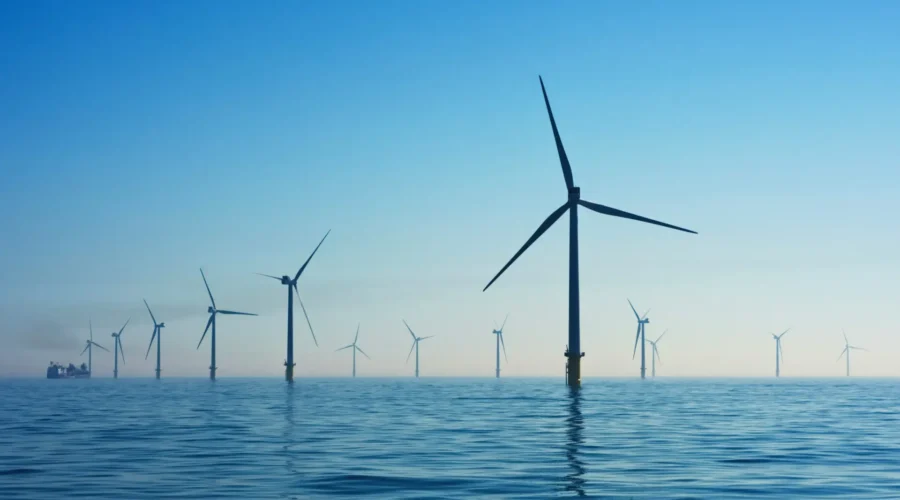
The first offshore wind farm in Poland: What Baltic Power means for the country and the economy
Baltic Power This is the first offshore wind farm in Poland, being realised by The ORLEN Group and a Canadian company Northland Power. This is a groundbreaking project that will not only increase the country's energy security but also stimulate the local economy, create jobs and contribute to CO2 emission reductions.₂.
Economic significance and local contribution
Baltic Power to największy projekt infrastrukturalny w historii Polski, o wartości ok. 20 miliardów złotych. Zakłada się, że co najmniej 21% wartości inwestycji trafi do polskich firm. W projekt zaangażowano m.in. fabrykę gondoli turbin Vestas in Szczecin, Tele-Fonika Kable in Bydgoszcz and the shipyards in Gdynia i Gdańsk producing steel components. The investment stimulates the development of the domestic maritime industry and at the same time lays the foundation for a new sector of the economy – offshore wind energy. This energy transformation, thanks to Baltic Power, will strengthen the country's energy security by increasing the share of renewable sources in the national system.
Technical specifications and construction schedule
Farma Baltic Power is located approximately 23 km north of the coast, in the area of Łeba and Choczewo. Within an area of 130 km², equivalent to the size of Gdynia, 76 Vestas wind turbines are being erected. Each of them has a capacity of 15 MW and a height exceeding 250 metres. The total installed capacity will be 1140 MW., which will allow for the satisfaction of the energy needs of approximately 1.5 million households. The construction of the onshore infrastructure began in 2023, and offshore works commenced at the beginning of 2025. In the latter half of 2025, the installation of turbines and offshore substations began. The completion of the investment and the start of commercial energy production are planned for 2026.
Employment and development of the offshore sector in Poland
The Baltic Power project significantly impacts the job market and competence development in offshore sector in Poland. The service base in Łeba will provide stable employment for a minimum of 30 years, supporting the farm's operation. In Szczecin, Vestas's turbine factory has created over 600 jobs. The investment also generates demand for specialists in engineering, logistics, service, and environmental research. Baltic Power has become an impetus for building a domestic supply chain for Offshore wind energy, engaging Polish firms in the production of components, transport, design, and technical services.
Environmental aspects
Once operational, the Baltic Power wind farm will generate approximately 4 TWh of energy annually, covering 3% of the country's demand and avoiding the emission of around 2.8 million tonnes of CO₂ per year. The farm's location 23 km from the shore minimises its impact on the landscape and tourism. During construction, solutions were implemented to limit the investment's impact on the environment, including bird monitoring, air curtains to reduce underwater noise, and measures to prevent disruption to marine life.
Social acceptance and information activities surrounding investments
The Baltic Power investment is accompanied by a broad information campaign aimed at building public acceptance and countering disinformation. Investors are actively debunking myths, including those concerning the alleged use of old turbines or the negative impact of the farm on fisheries. In reality, the turbines are new, and the project takes into account the interests of the fishing industry – measures have been implemented Shipowner compensation programme, whose operations have been restricted. An example of good cooperation with local communities is Łeba, where a service base is being built, providing jobs and long-term support for the region.
Baltic Power as a pillar of energy transformation
Baltic Power is a groundbreaking investment that symbolises Poland's energy transformation. The project, which generates wind energy, combines climate, economic, and social benefits, paving the way for the development of the entire offshore wind sector in Polish Baltic waters. It is also an important example of integrating Polish industry with the global offshore wind sector.
Author: Kamila Wirkus